
Home
>
Shop by category
>
Home & Appliances
›
Tech
›
DIY & Garden
›
Travel & Hire
›
COMPARE BY CATEGORY
Add paragraph text. Click “Edit Text” to update the font, size and more. To change and reuse text themes, go to Site Styles.
Best 55-Inch OLED and QLED TVs Compared
A 55-inch TV is the sweet spot for most living rooms. It's big enough for films and sport but still easy to fit on a stand or wall. We've compared the best OLED and QLED models so you can see which one suits your room, your viewing and your budget.
November 2026
We may earn a commission when you buy through our links. It never affects which products we pick or how we rank them. Affiliate Disclosure.

Our Top Picks
Best overall: LG C6 OLED55C66LB
Best for bright rooms: Samsung S90H QE55S90HAEXXU
Best budget: Hisense E7S Pro 55E7STUK PRO
Which One Suits You?

LG C6 55-Inch OLED evo TV OLED55C66LB.AEK
Best overall
Who It Suits
Most households wanting a top-quality picture for films, sport and gaming without paying flagship prices
Who Should Not Buy
Anyone watching mainly in a very bright, sunny room, where the glossy screen shows reflections
Pros
Excellent all-round picture with deep blacks and rich colour
Superb for gaming with fast 165Hz support and four HDMI 2.1 ports
Smooth, simple smart system with years of updates
Cons
The glossy screen shows reflections in bright rooms
Built-in sound is fine, but film fans will want a soundbar
What Owners Say
As a 2026 model, owner feedback is still building. LG's C range has a long record of strong owner ratings, and reflections in bright rooms are the issue owners raise most often.

Samsung S90H 55-Inch OLED TV QE55S90HAEXXU
Best for bright rooms
Who It Suits
Living rooms with big windows or lots of daytime viewing, plus gamers who want a fast, responsive screen
Who Should Not Buy
Anyone who watches a lot of Dolby Vision content, as Samsung does not support it
Pros
Low-glare screen keeps the picture clear in bright rooms
Very bright for an OLED, with deep blacks
Excellent for gaming with very low lag
Cons
No Dolby Vision support (it uses HDR10+ instead)
Slightly less colour punch than Samsung's top-end models
What Owners Say
Owner feedback is still limited for this 2026 model. Early ratings are very positive, mostly for brightness and how well the screen handles glare.
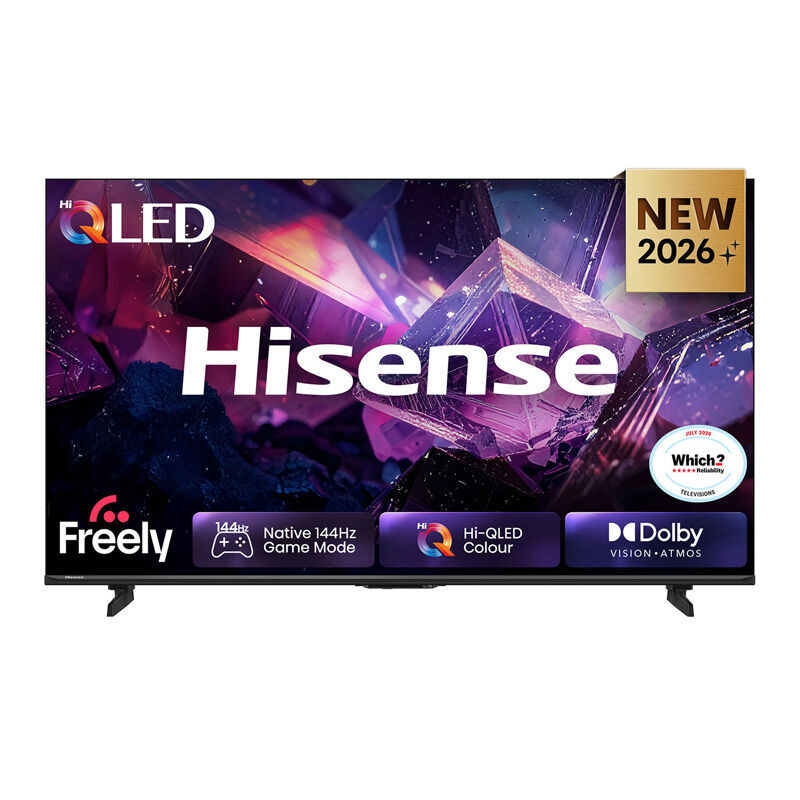
Hisense E7S Pro 55-Inch QLED TV 55E7STUK PRO
Best Budget
Who It Suits
Families and gamers wanting a bright, smooth picture without paying OLED prices
Who Should Not Buy
Film fans who watch in the dark and want the deep blacks only OLED can give
Pros
Fast 144Hz gaming with smooth, tear-free motion
Supports both Dolby Vision and HDR10+
Dolby Atmos and DTS:X sound built in
Cons
Blacks look slightly grey in a dark room compared with OLED
Shorter standard warranty than some rivals
What Owners Say
This 2026 model is new, so owner feedback is limited. Owners of the previous E7 Pro models rated them highly for value and gaming.
Compare Them Side By Side
Model | LG C6 | Samsung S90H | Hisense E7S Pro |
Screen type | OLED | OLED | QLED |
Best room | Most rooms | Bright rooms | Bright rooms |
Dolby vision | Yes | No | Yes |
Gaming refresh | 165Hz | 165Hz | 144Hz |
Screen finish | Glossy | Low glare | Glossy |
What To Look For
OLED or QLED: An OLED screen lights each tiny pixel on its own, so blacks are truly black and contrast looks rich, especially in a dim room. QLED is an LCD screen with a colour-boosting layer. It is usually cheaper and can get very bright, but blacks look slightly grey in a dark room.
Your room: In a sunny room, a low-glare screen like the Samsung S90H's makes a big difference. Glossy screens look best with curtains drawn or in the evening.
HDR formats: HDR (high dynamic range) adds brighter highlights and richer colour. Dolby Vision is the version used on many Netflix and Disney+ shows. Samsung TVs use HDR10+ instead, which still looks great but is supported by fewer streaming titles.
Gaming: For a PS5 or Xbox Series X, look for 120Hz or higher and HDMI 2.1 ports. These give smoother, faster gameplay. All three picks support this.
Sound: Slim TVs have small speakers. For films, most people will notice a real improvement from adding a soundbar.
Warranty: Warranty length differs between brands, so check the product page before you buy.
Safety: Always use the stand or a wall bracket rated for your TV's size and weight. Follow the manufacturer's instructions when mounting.
How We Chose
We compared current 55-inch TVs using independent expert testing from Which?, RTINGS, What Hi-Fi, TechRadar, T3 and Tom's Guide, along with manufacturer specs and owner reviews from major retailers. We looked for patterns in what owners praise and complain about, and we checked for safety notices. Our picks are based on this research. We have not tested these TVs ourselves.
Frequently Asked Questions
Is OLED better than QLED?
For picture quality in a dim room, usually yes. OLED gives deeper blacks and better contrast. QLED can be brighter and is often cheaper, which suits bright rooms and tighter budgets.
Do OLED TVs still get burn-in?
It is rare with normal viewing. Modern OLEDs have built-in protection, but leaving the same static image on screen for many hours every day can still cause it over time.
Do Samsung TVs support Dolby Vision?
No. Samsung uses HDR10+ instead. Both improve brightness and colour, but Dolby Vision is more widely used by streaming services.
How far should I sit from a 55-inch TV?
Around two metres or more works well for most people. Closer can feel immersive for films and gaming, while further away suits a larger room.
Do I need a soundbar with a new TV?
Not for everyday viewing, but for films and sport a soundbar gives fuller sound and clearer dialogue than most slim TV speakers.